
Every parent has heard these words. “It’s too hard.” “I can’t do it.” “That’s not fair!” Whether it’s climbing a little higher, missing a basketball shot, losing an arcade game, or waiting for a turn, frustration is a normal part of childhood. As parents, our first instinct is often to step in and fix the problem. We want to make our children feel better as quickly as possible. But child development experts agree on something important: children don’t learn to handle frustration by avoiding it. They learn by experiencing manageable challenges in safe, supportive environments. That’s one of the hidden benefits of play. At Kids Wonderland Indoor Play Area in McAllen, children encounter dozens of small challenges during every visit. While they simply think they’re having fun, they’re also practicing one of life’s most valuable skills—learning how to keep going when something doesn’t go as planned.
How Play Helps Children Handle Frustration: Why Every “I Can’t” Is an Opportunity to Grow
Why Frustration Is a Healthy Part of Childhood
Frustration often has a negative reputation, but it serves an important purpose.
It tells children that something is difficult, unfamiliar, or requires a different approach.
Without small moments of frustration, children would have fewer opportunities to practice:
- Patience
- Self-control
- Flexible thinking
- Problem-solving
- Persistence
These skills don’t appear overnight. They develop one experience at a time.
Play creates those experiences naturally.
What Happens Inside a Child’s Brain During Play?
When children face a challenge during play, their brains are constantly making decisions.
“Should I try again?”
“Maybe I can climb another way.”
“I’ll wait until it’s my turn.”
“I almost made it.”
Each attempt encourages the brain to create stronger connections related to planning, emotional regulation, and decision-making.
Unlike structured lessons, play keeps children motivated because the reward is immediate—the excitement of figuring something out for themselves.
Why “Productive Struggle” Is Good for Children
There is an important difference between overwhelming frustration and productive frustration.
Overwhelming frustration makes children feel defeated.
Productive frustration challenges them just enough to encourage another attempt.
Imagine a child trying to climb onto a play feature.
The first try doesn’t work.
The second try is a little better.
By the third attempt, they succeed.
That moment isn’t just about reaching the top.
It’s about discovering that persistence often leads to success.
Those small victories become powerful memories children carry into school, sports, friendships, and everyday life.
Play Gives Children Permission to Make Mistakes
Adults often worry about making mistakes.
Children, however, are naturally wired to experiment.
During play they might:
- Miss the target in an arcade game.
- Take the wrong path through an obstacle course.
- Lose a race with a sibling.
- Fall while learning a new movement.
- Build a block tower that immediately collapses.
None of these moments are failures.
They’re opportunities to adjust, laugh, and try again.
Because play doesn’t feel like a test, children become more willing to keep experimenting.
Learning That “Not Yet” Is Different From “Never”
One of the greatest lessons play teaches is that improvement takes time.
Children rarely master something on the first attempt.
Instead, they learn that every try teaches them something new.
The slide that once looked intimidating eventually becomes exciting.
The obstacle course that once felt impossible becomes familiar.
The arcade game they couldn’t win last month suddenly earns tickets today.
This gradual progress helps children replace “I can’t” with “I’m still learning.”
That small shift in thinking can influence how they approach challenges throughout life.
Why Waiting Is Part of Learning
Not every challenge is physical.
Sometimes the hardest part is simply waiting.
Children regularly practice patience when they:
- Wait their turn for a favorite inflatable.
- Share arcade games.
- Cooperate with siblings.
- Play alongside children they’ve never met before.
Although these moments may seem ordinary, they’re helping children develop social and emotional skills that classrooms and workplaces value for years to come.
What Parents Can Do Instead of Solving Every Problem
Supporting children doesn’t always mean fixing every situation.
Sometimes the most helpful response is encouragement instead of intervention.
Instead of saying:
“Here, let me do it.”
Try saying:
“What do you think you could try next?”
“You got a little farther that time.”
“I can see you’re working really hard.”
“Would you like to try once more before asking for help?”
These simple responses encourage children to think independently while knowing a trusted adult is nearby.
Why Indoor Play Creates the Perfect Environment for Emotional Growth
Children benefit most when they can experience challenges in a space designed for exploration.
An indoor play environment offers opportunities to climb, crawl, slide, balance, jump, solve problems, and interact with other children—all while parents remain close by.
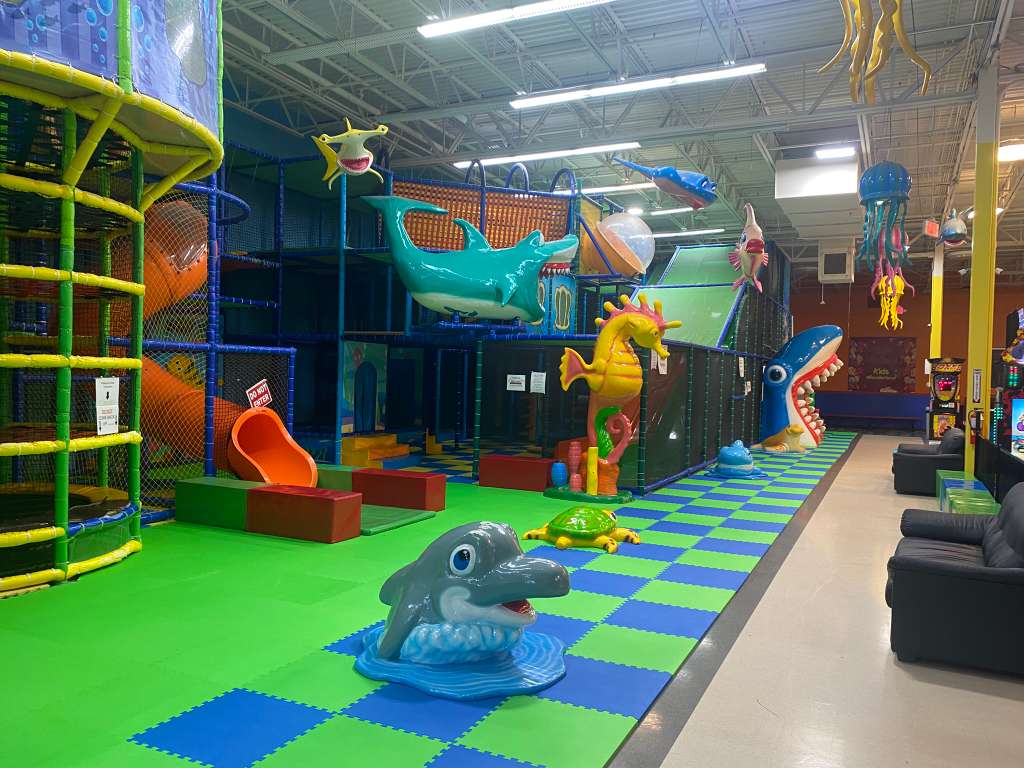
At Kids Wonderland Indoor Play Area in McAllen, children naturally encounter moments that encourage persistence, cooperation, and creative problem-solving.
From giant inflatables and obstacle courses to ball pits, slides, climbing structures, and arcade games, every activity presents a new opportunity to practice handling small setbacks in a fun and supportive environment.
Children usually leave talking about how much fun they had.
Parents may not realize they’re also leaving with stronger coping skills than when they arrived.
The Takeaway
Life won’t always go exactly as children hope.
A toy might break.
A game might be lost.
A school assignment may feel difficult.
A friendship may require compromise.
Play doesn’t remove these future challenges.
Instead, it quietly prepares children for them.
Every time a child chooses to try again after falling, waits patiently for a turn, or solves a problem independently, they’re building emotional resilience that extends far beyond the playground.
Sometimes the greatest lesson a child learns during play isn’t how to climb higher or run faster.
It’s learning that difficult moments don’t last forever—and that with patience, practice, and another attempt, today’s frustration can become tomorrow’s confidence.
Frequently Asked Questions
Is frustration healthy for children?
Yes. Small, age-appropriate frustrations help children develop resilience, patience, emotional regulation, and problem-solving skills. The goal isn’t to eliminate frustration but to help children learn healthy ways to work through it.
How does play help children regulate emotions?
Play gives children repeated opportunities to face challenges, adapt to setbacks, make decisions, and try again. These experiences strengthen emotional regulation in a natural, enjoyable way.
Should parents step in when a child gets frustrated?
If a child is safe, giving them a little time to problem-solve independently can be beneficial. Gentle encouragement often helps children build confidence and persistence more effectively than immediately solving the problem.
What types of play help children build resilience?
Activities that involve climbing, balancing, obstacle courses, imaginative play, turn-taking, puzzles, and age-appropriate games all encourage children to practice perseverance and flexible thinking.
Where can children enjoy active indoor play in McAllen?
Kids Wonderland Indoor Play Area in McAllen offers giant inflatables, obstacle courses, ball pits, climbing structures, slides, arcade games, and open play spaces where children can stay active while developing important social and emotional skills through play.
Conclusion
The next time your child says, “I can’t do it,” it may feel natural to jump in with a solution. But sometimes, the greatest gift we can give children is the chance to discover that they are capable of finding their own way forward.
Play isn’t simply about keeping children entertained. It is where they experience disappointment, solve problems, make decisions, adapt to unexpected situations, and learn that progress often comes one small step at a time.
Every missed shot, every climb that takes more than one attempt, every turn they patiently wait for, and every obstacle they overcome becomes part of a much bigger lesson: frustration is not the end of the story—it’s often where growth begins.
At Kids Wonderland Indoor Play Area in McAllen, children don’t come to learn about resilience from a lesson or a workbook. They discover it naturally as they explore giant inflatables, navigate obstacle courses, play arcade games, and create new adventures with friends.
Long after children forget which slide they raced down first or which game earned the most tickets, they’ll continue to benefit from something much more valuable—the confidence to face life’s challenges with patience, persistence, and the belief that trying one more time is always worthwhile.