
Parents carefully choose shoes for their children, but when it comes to an indoor playground, the shoes often come off. That’s when socks become surprisingly important. Regular socks and grip socks both cover children’s feet, but they don’t perform exactly the same job. Grip socks have textured rubber or silicone-style material underneath the foot that can provide additional traction on compatible indoor surfaces. For children who are climbing, crawling, turning, stopping, and exploring an indoor play area, that difference can matter. So, which is better?
Grip Socks vs. Regular Socks for Kids: Which Is Better for Indoor Play?
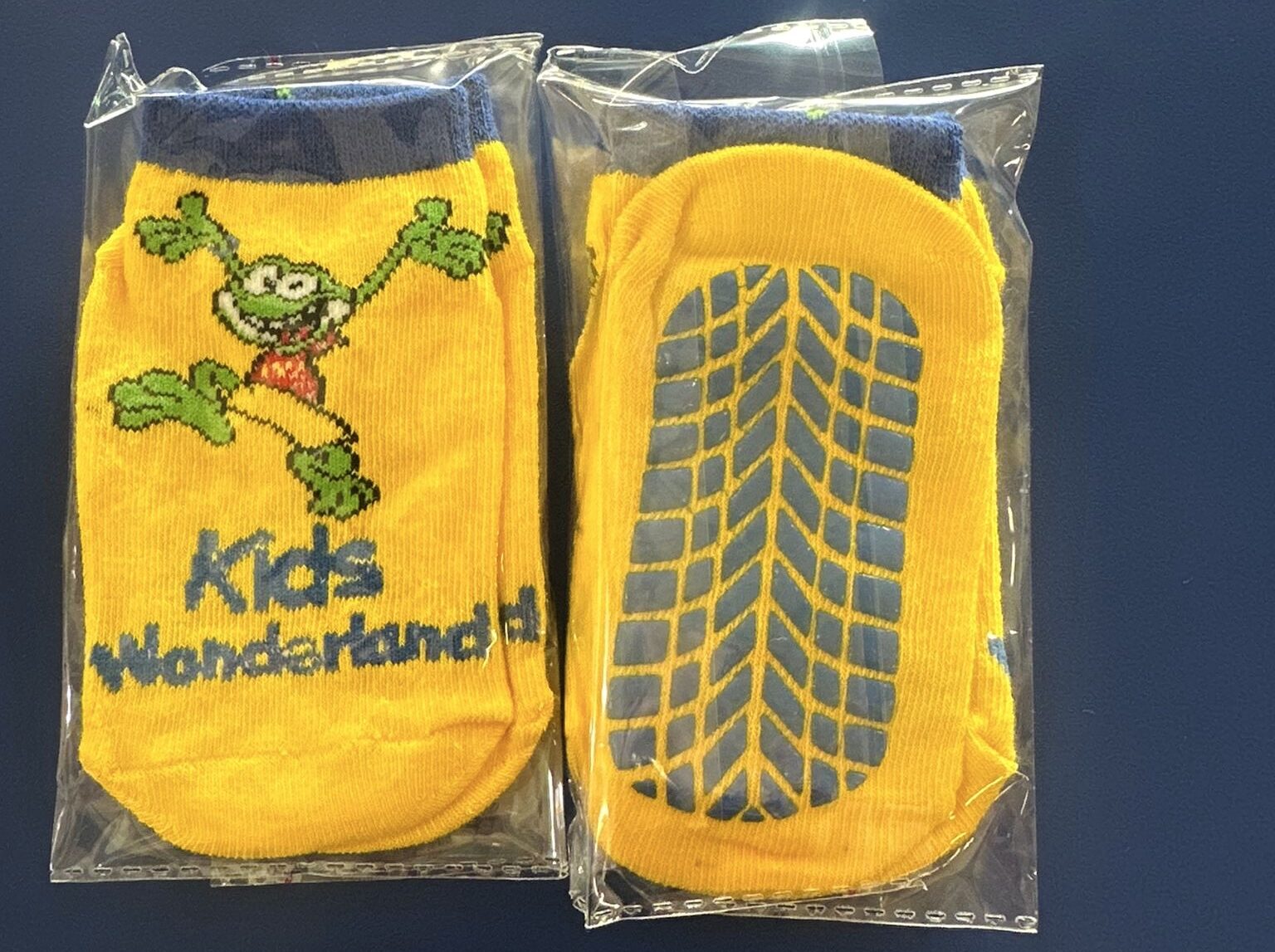
Quick Answer: Are Grip Socks Better Than Regular Socks for Indoor Play?
Grip socks can be a better option than regular socks for active indoor play because they combine foot coverage with additional traction.
Regular socks cover the feet but generally have smooth fabric soles. Grip socks add textured material underneath the foot designed to increase friction on compatible surfaces.
However, grip socks do not make children slip-proof. Proper fit, appropriate supervision, playground rules, and safe use of equipment remain important.
For families planning a visit to Kids Wonderland McAllen, parents should always follow the facility’s current sock requirements.
What Are Grip Socks?
Grip socks are socks with small rubberized, silicone-style, or similar textured grips attached to the bottom.
You’ve probably seen them at:
- indoor playgrounds
- children’s activity centers
- trampoline parks
- gymnastics facilities
- play gyms
- other shoe-free indoor activity spaces
The concept is simple:
Regular socks = foot coverage.
Grip socks = foot coverage + additional traction.
That added traction is the primary reason grip socks are commonly associated with active indoor environments.
Why Are Socks Important at an Indoor Playground?
Before comparing grip socks with ordinary socks, it’s worth understanding why socks matter at all.
Indoor playgrounds are highly active shared environments.
Children may climb, crawl, kneel, sit, and place their hands and feet on many of the same surfaces throughout the day.
Socks create a physical layer between bare feet and shared play surfaces.
Removing outdoor shoes from designated play areas can also help reduce the amount of outside dirt and debris carried onto play equipment.
Socks don’t replace regular cleaning and maintenance, but they can be one component of a well-managed indoor play environment.
Grip Socks vs. Regular Socks: What’s the Difference?
The biggest difference is traction.
Regular Socks
Traditional children’s socks generally have smooth fabric underneath.
They provide:
- foot coverage
- comfort
- a barrier between bare feet and shared surfaces
But smooth fabric can provide relatively little traction on certain surfaces.
Grip Socks
Grip socks provide those same basic benefits while adding textured material underneath the foot.
That material is intended to create additional friction between the child’s foot and compatible surfaces.
For active indoor play, that can make grip socks a practical option.
Why Does Grip Matter During Indoor Play?
Children rarely move predictably.
Watch a child at an indoor playground and you might see:
Walk → run → stop → turn → climb → crawl → slide → stand → run again.
And that might happen in less than a minute.
Children constantly change:
- direction
- speed
- elevation
- body position
- activity
- play surfaces
That’s very different from simply walking across a room.
Grip socks are designed to provide additional traction during some of those movements.
They don’t eliminate falls, but the traction underneath the foot is an important difference compared with many smooth-bottomed regular socks.
7 Benefits of Grip Socks for Kids During Indoor Play
1. Additional Traction
This is the most important difference.
The textured material underneath grip socks is designed to increase friction between the sock and compatible surfaces.
For children moving through an active indoor environment, additional traction can be useful.
2. Better Footing During Direction Changes
Children stop and turn constantly while playing.
They may suddenly change direction because they see another attraction or hear a friend calling them.
Grip underneath the foot can provide additional traction during some of these movements.
3. Useful During Climbing and Exploring
Indoor play isn’t just about running.
Children may climb, crawl, step, balance, and navigate obstacles.
During certain activities, additional traction underneath the foot can help provide better footing.
4. Feet Remain Covered
Grip socks still provide the basic coverage of ordinary socks.
This creates a layer between children’s bare feet and shared indoor surfaces.
5. Designed for Indoor Movement
Regular socks are primarily everyday clothing.
Grip socks have an additional functional feature specifically intended to provide traction.
That’s why they’re commonly used in environments built around movement.
6. A Practical Option for Younger Children
Toddlers and younger children are still developing coordination and balance.
They’re also learning how quickly they can move, stop, turn, climb, and navigate unfamiliar environments.
Properly fitting grip socks can provide foot coverage plus additional traction on compatible surfaces.
They are not a substitute for adult supervision.
7. Many Grip Socks Can Be Reused
Depending on the manufacturer’s care instructions, many grip socks can be washed and used again.
Parents who frequently visit indoor activity centers may find it convenient to keep a pair with their child’s play essentials.
Are Grip Socks Good for Toddlers?
Grip socks can be particularly useful to consider for toddlers because younger children are still developing balance, coordination, and confidence in their movements.
But fit matters considerably.
Grip socks that are too large can twist around the foot. If that happens, the grip material may move away from the bottom of the foot and onto the side.
Parents should choose socks that:
- fit securely
- aren’t excessively tight
- don’t bunch around the toes
- stay properly positioned during movement
- keep the grip material underneath the foot
The presence of grips isn’t enough—the grips need to remain where they’re supposed to be.
When Should You Replace Your Child’s Grip Socks?
Grip socks aren’t permanent.
Before reusing an older pair, check the bottom.
Consider replacing them when:
- significant sections of grip material are missing
- grips are peeling away
- holes have developed
- the socks repeatedly rotate around the child’s feet
- the elastic no longer holds them securely
- the child has outgrown them
This simple check can become part of getting ready for an indoor play day.
Can You Wash and Reuse Grip Socks?
Many grip socks can be washed and reused, but parents should follow the manufacturer’s care instructions.
Before bringing them back to an indoor play area, make sure they are:
clean, dry, properly fitting, and still have intact grips.
Repeated washing and normal wear may eventually affect the grip material.
Grip Socks vs. Bare Feet: Which Is Better for Indoor Play?
Bare feet naturally have some traction, which may lead parents to wonder why children need socks at all.
But traction isn’t the only consideration.
Indoor playgrounds are shared environments.
Socks create a layer between children’s feet and shared surfaces, while grip socks combine that coverage with additional traction.
Individual indoor playgrounds may have different footwear requirements, so parents should always follow the rules of the facility they’re visiting.
Do Grip Socks Prevent Kids From Falling?
No. Grip socks cannot prevent every slip or fall.
Children can still lose their balance, trip, collide with another child, misjudge a step, or use equipment incorrectly.
Grip socks should therefore be viewed as one part of preparing children for active indoor play—not a guarantee against injuries.
Supervision, appropriate play behavior, equipment maintenance, and following facility rules remain important.
How Do You Choose Good Grip Socks for Kids?
Parents don’t necessarily need the most expensive pair.
Focus on functionality.
Choose the Correct Size
The sock should stay securely positioned without squeezing the child’s foot.
Look at Grip Placement
The textured material should cover useful areas underneath the foot.
Check Comfort
Children may wear their socks throughout an extended play session.
Check the Elastic
The sock shouldn’t constantly slide down or rotate.
Inspect Used Pairs
If the grip material is badly worn, it may be time for a replacement.
What Should Kids Wear to an Indoor Playground?
Comfortable clothing that allows movement is generally a good starting point.
Depending on the facility’s rules, parents may want to prepare:
- comfortable play clothes
- properly fitting socks
- grip socks when appropriate
- securely fitting clothing suitable for active play
Parents should always check the specific indoor playground’s current rules before visiting.
Planning an Indoor Play Day in McAllen, Texas?
Families searching for indoor activities for kids in McAllen, TX often want somewhere children can actually move.
Indoor play gives children opportunities to climb, explore, interact with other kids, and burn some of that seemingly endless childhood energy.
Kids Wonderland McAllen provides families with an indoor destination centered around active play and family fun.
When preparing for your next visit, socks may seem like a tiny detail.
But choosing the appropriate socks—and making sure they fit correctly—can be one more way to prepare your child for an active play day.
Frequently Asked Questions
Are grip socks better than regular socks for an indoor playground?
Grip socks can provide an advantage during active indoor play because they have textured material underneath designed to provide additional traction on compatible surfaces. Regular socks cover children’s feet but usually have smoother bottoms.
Why do indoor playgrounds require socks?
Sock requirements vary by facility, but socks provide a layer between children’s feet and shared play surfaces. Keeping outdoor shoes away from designated play areas can also help reduce dirt and debris carried onto equipment.
Can my child wear regular socks at an indoor playground?
It depends on the facility. Some indoor playgrounds allow regular socks, while others may have different requirements. Check the facility’s current rules before visiting.
Do kids need grip socks at Kids Wonderland McAllen?
Parents should follow Kids Wonderland McAllen’s current sock policy when visiting. Requirements can change, so checking current facility rules is the best approach.
Are grip socks safer than regular socks?
Grip socks are designed to provide additional traction compared with smooth-bottomed regular socks on compatible surfaces. However, they cannot prevent every slip, fall, or injury.
Are grip socks good for toddlers?
Properly fitting grip socks can be a useful option for toddlers because they combine foot coverage with additional traction. Appropriate adult supervision remains important.
Can grip socks be washed?
Many reusable grip socks can be washed. Follow the manufacturer’s instructions and check the condition of the grips before reuse.
How often should children’s grip socks be replaced?
There is no universal replacement schedule. Replace them when the child outgrows them or when the fabric, elastic, or grip material becomes significantly worn.
What happens if grip socks are too big?
Oversized socks can move around the child’s foot, potentially shifting the grips away from the sole. Proper sizing helps keep the grip material underneath the foot.
What are some indoor activities for kids in McAllen?
Indoor playgrounds are one option for McAllen families looking for active indoor entertainment. Kids Wonderland McAllen provides an indoor play environment where children can move, explore, and enjoy active play.
Key Takeaways
For parents comparing grip socks vs. regular socks for kids, the most important difference is traction.
- Regular socks provide foot coverage and comfort.
- Grip socks provide foot coverage plus additional traction.
- Proper sizing helps keep the grips underneath the child’s feet.
- Worn or damaged grips should be checked before reuse.
- Grip socks don’t eliminate the possibility of slipping or falling.
- Socks provide a layer between bare feet and shared play surfaces.
- Parents should always follow the individual indoor playground’s current sock requirements.
- Families looking for indoor kids activities in McAllen, Texas can make appropriate socks part of their normal play-day preparation.
Conclusion: Why Grip Socks Can Be the Better Choice for Active Indoor Play
When comparing grip socks with regular socks for kids, the difference comes down primarily to one feature:
Grip.
Children at an indoor playground aren’t simply walking. They’re climbing, turning, crawling, stopping, exploring, and constantly moving between activities.
Regular socks provide coverage.
Grip socks provide coverage while adding traction underneath the foot.
That makes them a practical option for many active indoor environments.
For parents searching for an indoor playground in McAllen, TX, Kids Wonderland McAllen gives children an opportunity to get active, explore, play, and enjoy time away from the screen.
Before heading out for your next indoor adventure, check the facility’s current requirements, choose comfortable play clothes, and don’t overlook one of the smallest pieces of play-day preparation:
the right socks.